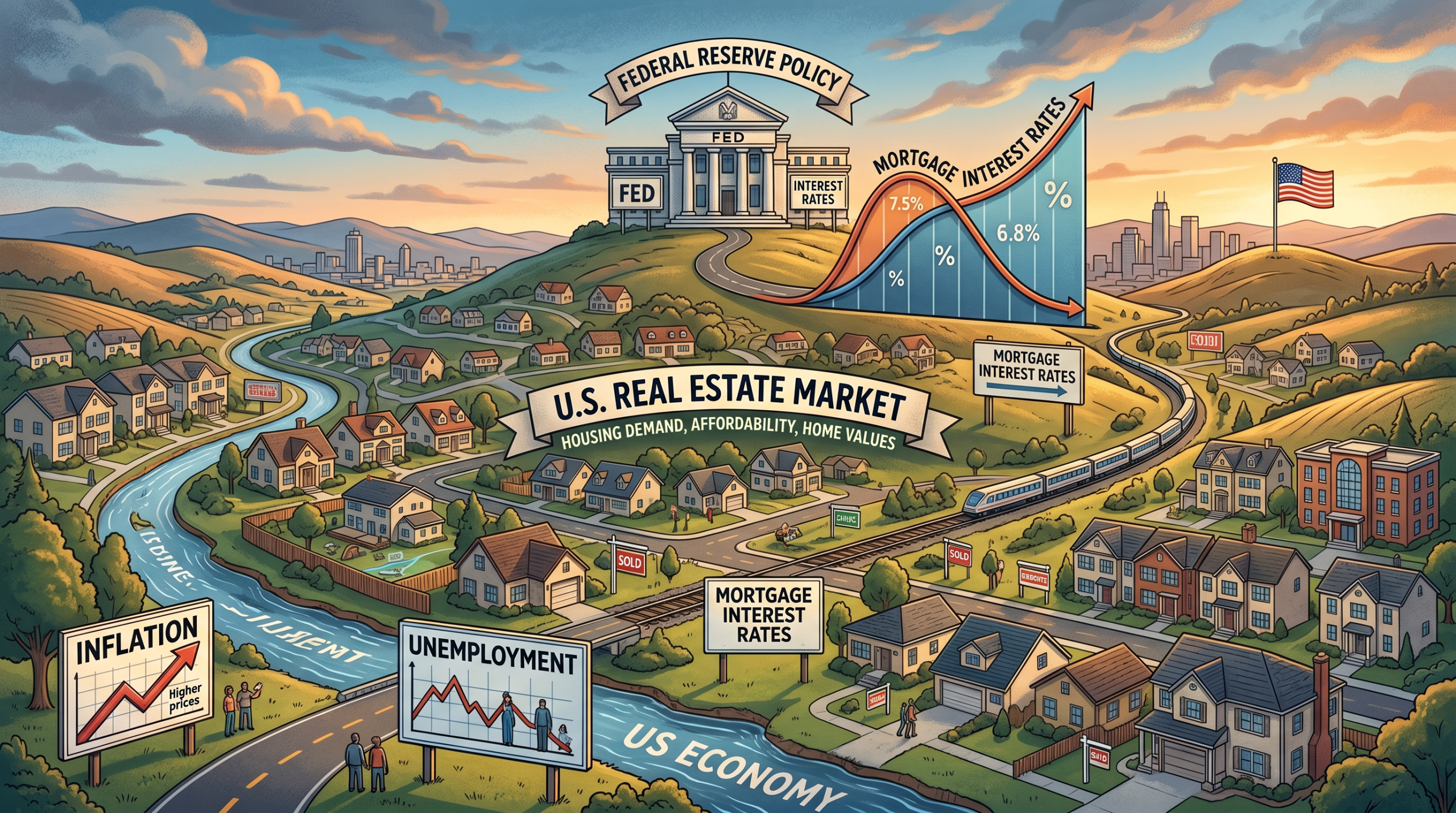
The U.S. housing market is closely linked to the overall economy, and shifts in key economic indicators can quickly influence real estate trends. Factors such as inflation, unemployment, Federal Reserve policy, and mortgage interest rates all play a critical role in shaping home prices, buyer demand, and housing affordability.
For homebuyers, sellers, and real estate investors, understanding how these economic forces interact can provide a competitive edge in today’s market.
Inflation and Home Prices
Inflation measures the rate at which the cost of goods and services increases over time. In real estate, rising inflation often leads to higher costs for construction materials, labor, insurance, and property maintenance—factors that can push home prices upward.
Real estate is often considered a hedge against inflation, meaning home values may rise during periods of moderate inflation. However, when inflation spikes too quickly, the Federal Reserve typically raises interest rates to slow the economy. This can reduce housing affordability and decrease buyer demand.
Key Insight:
Moderate inflation can support rising home values, while high inflation often leads to higher interest rates and slower housing activity.
Unemployment and Housing Demand
Employment levels are a major driver of real estate demand. When job growth is strong and wages are rising, buyers are more confident in purchasing homes and qualifying for mortgages.
In contrast, rising unemployment can weaken buyer confidence and reduce the number of qualified homebuyers. During economic downturns or recessions, housing demand often slows as fewer people are able or willing to make large financial commitments.
Key Insight:
Low unemployment strengthens the housing market, while job losses can reduce buyer activity and slow home sales.
Federal Reserve Policy and Interest Rates
The Federal Reserve plays a key role in influencing interest rates across the economy. While it does not directly set mortgage rates, its decisions strongly impact borrowing costs.
When inflation rises, the Fed often increases the federal funds rate, which can lead to:
-
Higher mortgage interest rates
-
Reduced home affordability
-
Slower home price growth
-
Fewer real estate transactions
When the Fed lowers rates, borrowing becomes more affordable, which can boost homebuying activity and increase demand.
Key Insight:
Rising interest rates typically cool the housing market, while lower rates tend to stimulate buying and refinancing.
Mortgage Rates and Affordability
Mortgage interest rates are one of the most important factors affecting housing affordability. Even a small increase in rates can significantly impact monthly payments and purchasing power.
For example, a buyer who qualifies for a higher-priced home at a 3% interest rate may need to lower their budget significantly if rates rise to 6% or 7%. As mortgage rates increase:
-
Buyers often reduce their price range
-
Some delay purchasing decisions
-
Sellers may receive fewer offers
Lower mortgage rates typically increase affordability and drive stronger demand, which can lead to higher home prices.
Key Insight:
Lower mortgage rates increase buyer demand, while higher rates reduce affordability and slow market activity.
How Economic Factors Work Together
The real estate market is influenced by multiple economic factors at the same time. These elements often create a chain reaction that impacts housing trends.
For example:
-
Rising inflation can lead to higher Federal Reserve interest rates
-
Higher Fed rates often increase mortgage rates
-
Higher mortgage rates reduce affordability
-
Reduced affordability can slow home sales and price growth
However, strong job growth and consumer confidence can help offset some of these pressures, especially in competitive housing markets like Southern California.
Real Estate Market Outlook
Understanding the relationship between economic trends and the housing market is essential for making informed real estate decisions. Inflation, employment, interest rates, and mortgage costs all influence home values, buyer demand, and overall market conditions.
For buyers and sellers in markets across Northern California, staying informed about these economic indicators can help you better time your move and navigate changing market conditions.